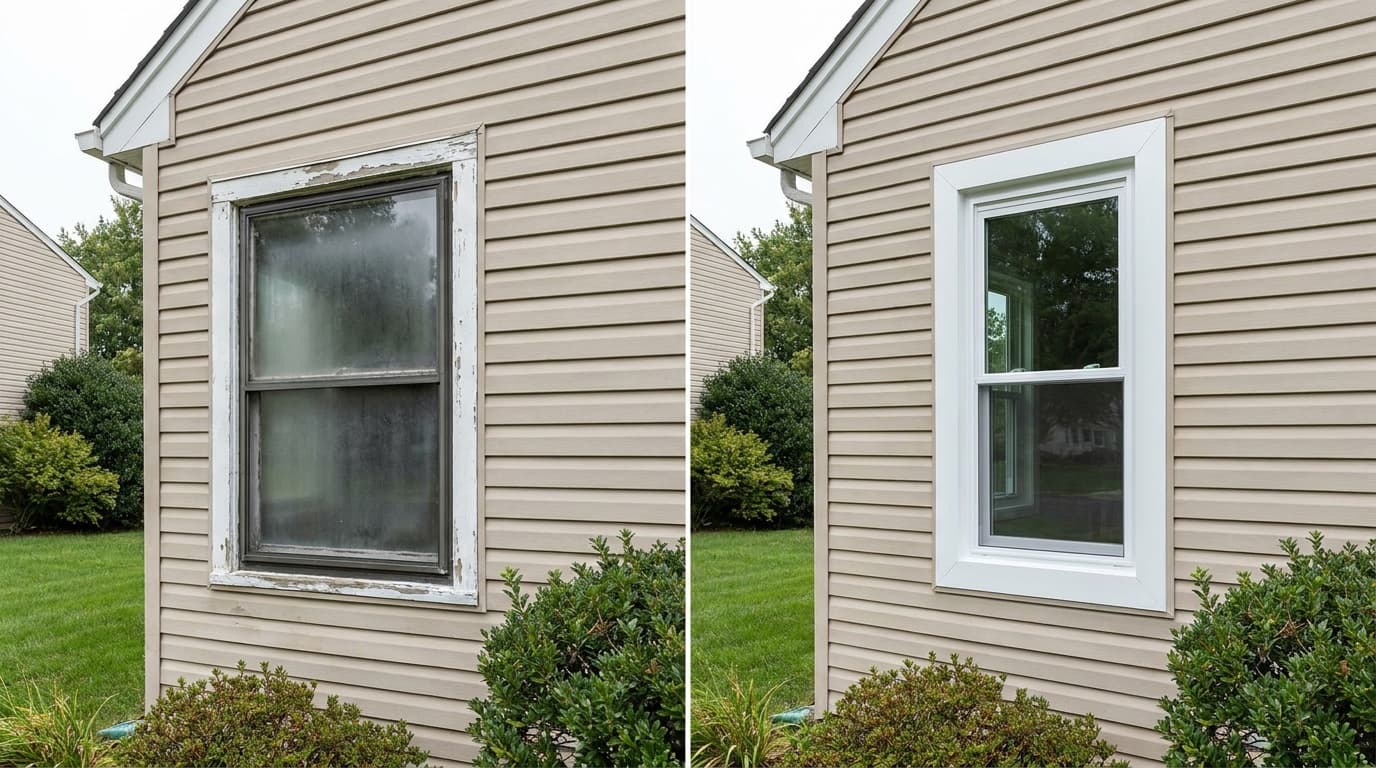
Vinyl vs Fiberglass Windows: Which Is Right for NJ Homes?
An honest comparison of vinyl and fiberglass replacement windows — performance, cost, appearance, and when fiberglass is worth the premium.
If you're replacing windows and have done any research, you've landed on this question: vinyl or fiberglass? Both are far superior to the aluminum single-pane windows common in homes built before 1990. Both are available in energy-efficient configurations. Both are installed by CLIQBUILT at competitive prices.
But they're not the same product, and the right choice depends on your home's specific situation. Here's the honest breakdown.
The core difference between vinyl and fiberglass windows
**Vinyl windows** are made from PVC (polyvinyl chloride), extruded into frame profiles. They've been the dominant replacement window choice in the US for 30+ years because they're cost-effective, low-maintenance, and deliver solid thermal performance. Vinyl doesn't rot, rust, or require painting.
**Fiberglass windows** are made from glass-fiber-reinforced polymer — the same material used in boats and aircraft components. The key difference is that fiberglass and glass have nearly identical thermal expansion coefficients. This means the frame and the glass unit expand and contract at the same rate with temperature changes, which reduces stress on seals over time and makes fiberglass the more dimensionally stable frame material.
Fiberglass is also significantly stronger than vinyl — about eight times stronger by tensile strength — which allows for slimmer frame profiles and more glass area for the same rough opening.
Performance comparison: energy efficiency
Both vinyl and fiberglass windows are available with Energy Star certified configurations — low-E glass coatings, argon or krypton gas fills, and warm-edge spacers. At the glass-unit level, the thermal performance is similar across both frame types.
Where fiberglass pulls ahead: the frame itself. Vinyl frames are hollow chambers filled with air. Fiberglass frames are typically foam-filled, which reduces conductive heat loss through the frame. In a climate like New Jersey's — cold winters, hot summers — that frame conductivity difference is real, though it's measured in single-digit percentage improvements in overall window U-factor rather than dramatic efficiency gains.
For most homeowners, both vinyl and fiberglass will meaningfully reduce energy bills compared to aging single-pane or non-low-E windows. Fiberglass edges out vinyl on frame efficiency, but the difference is modest.
Appearance: which looks better?
Vinyl wins on variety at the entry price point — it's available in dozens of colors and finishes. However, vinyl can't be painted after the fact; the color is baked in, and if you want to change it later, you're replacing the windows.
Fiberglass wins on appearance at the premium end. ProVia fiberglass windows can be factory-finished in virtually any color including wood-grain textures that closely mimic painted wood. They're also available with wood interior finishes bonded to the fiberglass frame — giving you the look of wood inside, the durability of fiberglass outside. For homes where the window interior appearance is important, fiberglass offers options vinyl can't match.
Frame profile width also matters aesthetically. Fiberglass's higher strength allows for slimmer sightlines — more glass, less frame — which looks more contemporary and maximizes natural light.
Cost difference: vinyl vs fiberglass
Vinyl window replacement with CLIQBUILT starts at $780 per window installed. Fiberglass windows are quoted by custom project, and typically run 30–60% more per window than comparable vinyl.
Whether that premium is worth it depends on a few factors:
Size of the windows: Large windows and picture windows — where frame-to-glass ratio is lower — benefit more from fiberglass's dimensional stability. The premium is more justified on a large fixed window than a small bathroom casement.
Age of the home: Older homes with settled frames and non-square openings can benefit from fiberglass's rigidity. It's less prone to warping or racking when installed into imperfect rough openings.
Design intent: If you're doing a high-end renovation where the windows are a design element, fiberglass's slim profiles and paintable surfaces justify the cost. For a straightforward whole-home replacement focused on efficiency and function, vinyl from ProVia or MI typically delivers the best value.
Our recommendation for NJ homeowners
For most whole-home replacements — especially in homes built between 1960 and 2000 — vinyl windows from ProVia, Alside, or MI Windows deliver excellent performance at a price point that makes a full-home upgrade achievable. These aren't builder-grade vinyl; they're professional-grade products with strong warranty programs.
For additions, renovations, or specific windows where appearance and longevity are priorities — bay windows, picture windows, windows that are architecturally prominent — fiberglass is worth the premium. We install ProVia fiberglass, which is among the best available.
Not sure which makes sense for your home? Our 15-minute phone consultation covers your specific situation without any commitment.
Frequently asked questions
See window replacement pricing and options.
Explore Window ReplacementGet a real price for your project —
online in 60 seconds.
Our self-serve calculator gives you a fixed price before we ever meet. No gatekeeping.